National Indigenous Peoples Day in Canada: its meaning, history and the day-off question
June 21 celebrates First Nations, Inuit and Métis cultures and contributions. Here is the history behind it, its place in Toronto, and what it means for your workday.
At a glance
June 21 at a glance
The observance is national; whether June 21 is a paid day off depends on your employer and jurisdiction.
- National Indigenous Peoples Day
- June 21, every year.
- Ontario day off
- June 21 is not an ESA public holiday.
- June 21 statutory recognition
- Yukon and Northwest Territories employment standards cover eligible employees.
- A different observance
- National Day for Truth and Reconciliation is September 30.
- Toronto planning
- Check the organizer’s current date, location and public invitation.
National Indigenous Peoples Day is June 21. It recognizes the cultures, histories and contributions of First Nations, Inuit and Métis. For Ontario employees covered by provincial employment standards, it does not automatically mean a paid day off. The national observance and the employment-law holiday calendar are different things. About June 21; Ontario’s public-holiday rules.
That distinction matters when booking time away from work, but it is only one part of the day. June 21 is also an opportunity to encounter Indigenous cultures as living, varied and contemporary—and to learn whose histories shape the place where you live. In Toronto, that means looking beyond a single festival to the Nations, community organizations, artists and families connected to the city.
In this article
- June 21 and September 30 are different days
- Does it mean a statutory holiday or paid day off?
- For most Ontario workers, June 21 is a regular workday
- Federal employees and the territorial exceptions
- Weekends, time in lieu and cultural leave
- What National Indigenous Peoples Day recognizes
- How the national day came about
- Indigenous Toronto extends beyond an annual event
- Toronto events: check the year, venue and invitation
- Attend as a guest and follow the host’s guidance
- Make the learning continue after June 21
- Frequently asked questions
June 21 and September 30 are different days
June 21 centres celebration and recognition. September 30, the National Day for Truth and Reconciliation, honours residential-school Survivors, the children who never returned, and their families and communities. Canada established the September holiday in 2021. Understanding that difference helps avoid treating either date as a generic “Indigenous holiday.” The purpose of September 30.
Orange Shirt Day also falls on September 30. Its history is rooted in Phyllis Webstad’s experience: the orange shirt her grandmother bought her was taken away when she entered residential school as a child. The Orange Shirt Society’s Survivor-led work gives that history a personal voice. An orange shirt is connected to remembrance and the message that every child matters.
Celebration and remembrance can inform each other, but the dates should be named accurately. An invitation, workplace notice or school activity should make clear which day it is observing and whose guidance has shaped it.
Does it mean a statutory holiday or paid day off?
The applicable employment law is the starting point. Location alone is not always enough: two people working in Toronto may be covered by different systems. This table highlights Ontario and the main June 21 exceptions; it is not a complete list of every public-sector agreement or provincial rule.
| Employment coverage | June 21 | September 30 |
|---|---|---|
| Ontario provincial employment standards | Not an ESA public holiday. | Not an ESA public holiday. |
| Federal private-sector labour standards | Not a general holiday. | A general holiday for covered employees. |
| Yukon employment standards | A statutory holiday, subject to eligibility. | Also a statutory holiday, subject to eligibility. |
| Northwest Territories employment standards | A statutory holiday, subject to eligibility. | Also a statutory holiday, subject to eligibility. |
| Other jurisdictions and public-sector agreements | Check the applicable law and agreement. | Check separately; recognition varies. |
Sources: Ontario, federal labour standards, Yukon and Northwest Territories. A statutory holiday can involve working with the required compensation or an alternative day off; it does not guarantee that every workplace closes.
For most Ontario workers, June 21 is a regular workday
Ontario’s ESA lists nine public holidays. June 21 and September 30 are absent, so those dates alone do not create an ESA entitlement to holiday pay, premium pay or a substitute day. A company may nevertheless provide an extra paid holiday through its policies or an employment or collective agreement. Check the Ontario public-holiday guide.
Ask payroll or your union which provision applies to you. Be specific: is the employer offering a paid closure, requiring vacation to be booked, allowing an unpaid absence, or moving hours to another day? Those arrangements have different consequences. Get the answer before treating a calendar label as approval to miss a scheduled shift.
A school event or a nearby office closure does not establish your own work entitlement. For family planning, check the school, child-care provider and employer separately. A cultural observance can be marked during normal operating hours.
Federal employees and the territorial exceptions
Federal private-sector labour standards cover industries including banks, air transportation and telecommunications. Working for a large business with locations across Canada does not, by itself, answer the jurisdiction question. The federal public service has a separate employment framework, so public servants should consult their applicable terms and agreements. See the federal jurisdiction list.
For workers covered by federal general-holiday rules, September 30 is included among the ten holidays; June 21 is not. Even on a recognized general holiday, some employees work and compensation or substitute-day provisions apply. Read the federal holiday guidance.
Yukon and the Northwest Territories recognize June 21 under their employment standards. Eligibility still matters. The NWT, for example, sets conditions involving service with the employer and attendance on scheduled workdays; qualifying part-time employees can receive holiday pay too. Use the NWT eligibility rules or Yukon holiday guidance for the relevant situation, rather than borrowing Ontario rules.
Weekends, time in lieu and cultural leave
If June 21 falls on your normal day off, do not assume the following Monday is automatically free. The relevant law or workplace agreement determines substitution. Yukon’s guidance addresses holidays that fall on a non-working day; Ontario’s calendar does not acquire an extra June holiday simply because June 21 lands on a weekend. Yukon’s non-working-day rule; Ontario’s holiday definition.
There is also a separate federal leave for traditional Indigenous practices. Under federal labour standards, qualifying Indigenous employees with at least three consecutive months of employment can take up to five unpaid days per calendar year for covered traditional practices, including hunting, fishing and harvesting. This is a purpose-specific leave, not a universal paid June 21 holiday. Read the leave’s scope and conditions.
If you want time to participate, start the conversation early and name the dates you need. Ask about any cultural-leave provisions, vacation options or agreed schedule changes. An employment-standards office or union can help clarify an uncertain entitlement. Do not assume that every public celebration qualifies for a particular leave.
What National Indigenous Peoples Day recognizes
First Nations, Inuit and Métis have distinct histories, languages and cultures. June is also National Indigenous History Month, offering a broader period for learning than one date can contain. The national history-month resources are a starting point; Indigenous organizations and creators help make that learning specific to a people, place or subject.
That specificity changes how you experience an event. Learn the name of the host Nation or organization. Notice whether a speaker is discussing their own community, a personal experience or a wider issue. One performance, artwork or account should not be treated as a complete representation of Indigenous life across Canada.
June 21 occurs around the summer solstice. The federal account notes the longstanding significance of this season for many Indigenous communities. That does not mean every Nation shares an identical ceremony or seasonal tradition. Read the background to June 21.
For a visitor, celebration can begin with listening, enjoying an artist’s work, buying directly from a maker or attending a publicly invited gathering. For Indigenous participants, the day may have different personal, family and community meanings. There is room for those differences without requiring everyone to experience the occasion in the same way.
How the national day came about
The observance followed Indigenous advocacy. In 1982, the National Indian Brotherhood, now the Assembly of First Nations, called for a solidarity day. In 1995, the Sacred Assembly chaired by Elijah Harper called for a national holiday; that year, the Royal Commission on Aboriginal Peoples also recommended a national day. The federal historical overview.
Governor General Roméo LeBlanc proclaimed the annual observance in 1996 under the name National Aboriginal Day. The original proclamation is the primary record behind that date. Its thirtieth anniversary fell in 2026.
The intention to change the name was announced in 2017, and a 2018 proclamation formally renamed it National Indigenous Peoples Day. Older archive captions and some employment materials still use the previous wording. Recognizing the old name helps when reading those records; use the current name when describing today’s observance.
The history also explains why “national” and “statutory” should be kept separate. A proclamation of recognition and an employment standard serve different purposes. The cultural importance of June 21 does not depend on whether a particular employer closes.
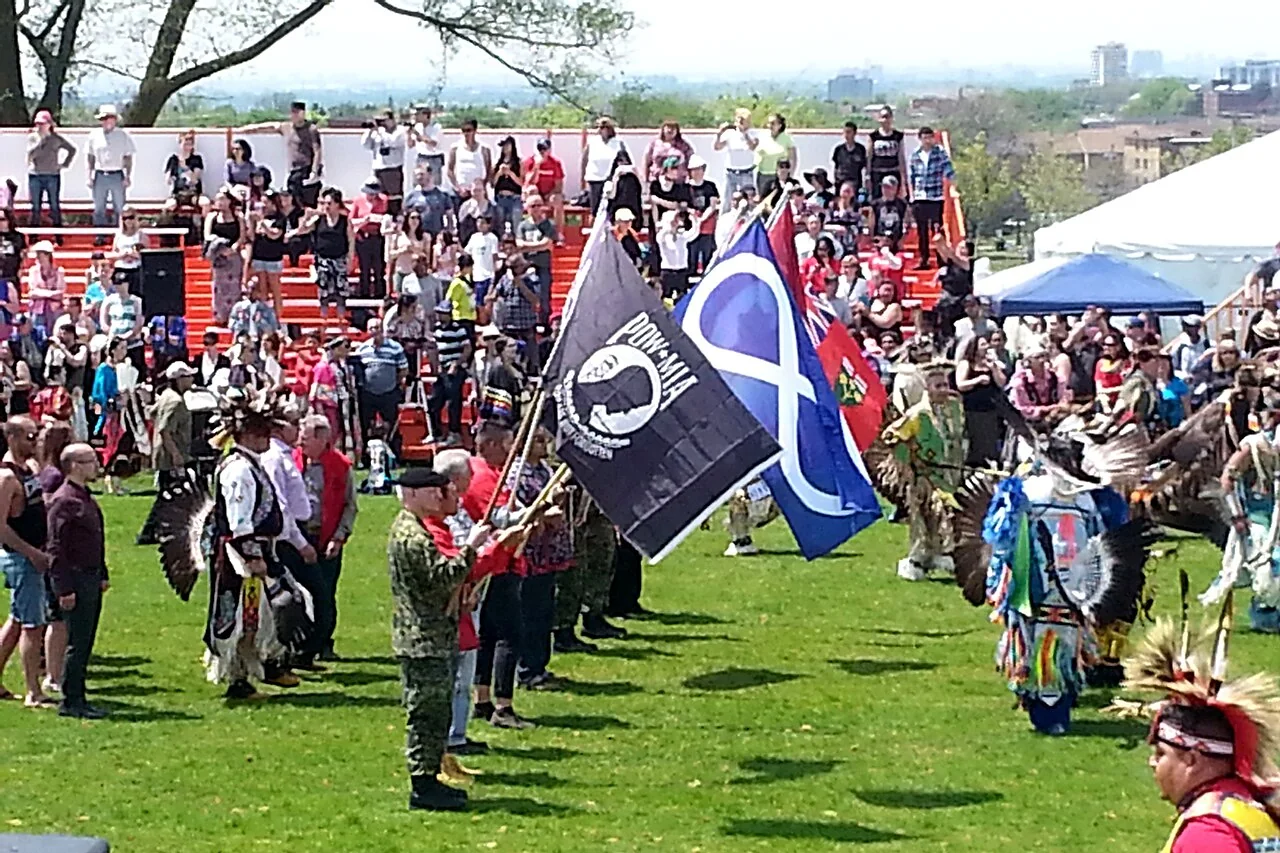
Indigenous Toronto extends beyond an annual event
Start with the histories of the land. The Mississaugas of the Credit First Nation’s timeline explains the Toronto Purchase, the later 1805 agreement and the settlement reached in 2010. Reading the Nation’s account gives more substance to a reference to Treaty 13 than repeating a place name without understanding its history.
Toronto also has longstanding urban Indigenous community institutions. The Native Canadian Centre of Toronto, founded in 1962, offers cultural programming and community services. Its work is a reminder that Indigenous life in the city includes everyday relationships, support and learning throughout the year.
Look at the intended audience of any program before attending. A public arts event and a community support service are different kinds of invitation. Follow the organization’s current information rather than assuming every activity is a drop-in attraction. If you want to help, use the volunteering, purchasing or donation channels the organization itself provides.
Toronto events: check the year, venue and invitation
Events may take place before June 21 as well as on the day. In 2026, Na-Me-Res announced its pow wow for June 13 at Dufferin Grove Park. This is an example of why an old venue listing can be misleading: the current organizer’s notice is more useful than an undated events roundup.
The City’s 2026 program placed the Indigenous Arts Festival at Biidaasige Park on June 20, followed by a June 21 morning ceremony there. Those dates have passed. They illustrate the shape of that year’s observance, not a promise about the next one. Read the dated City announcement.
For a future visit, check the City’s National Indigenous Peoples Day page and the host organization close to the date. Confirm the year, location, start time, registration requirements and whether the event welcomes the public. For an early ceremony, also plan transport and accessibility needs before the morning itself.
Keep your day realistic. Choosing one gathering and allowing time to listen is often more useful than racing between several venues. If travelling with children, talk beforehand about the host, why people are gathering and how to follow instructions when a ceremony or performance begins.
Attend as a guest and follow the host’s guidance
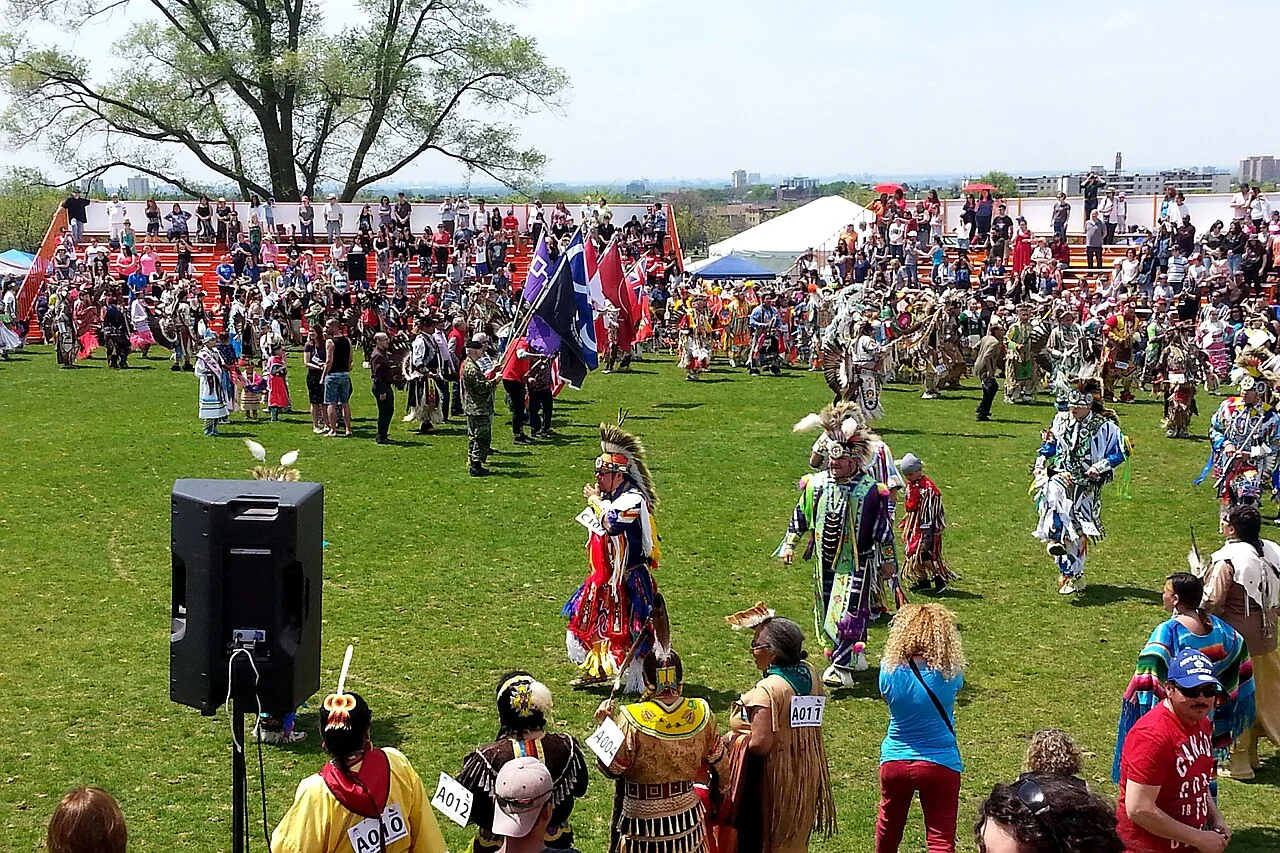
At a pow wow, the Indigenous Tourism Association of Canada’s Pow Wow 101 guide provides useful orientation. The clothing worn by dancers is regalia, with personal and cultural significance. Ask before photographing people, avoid touching regalia, and listen to the emcee’s directions about participation and times when photography is inappropriate.
The instructions at the gathering you attend take priority over a generic checklist. A public invitation is not permission to enter every space, record every moment or join every activity. If uncertain, ask an organizer quietly. Make room for people who are there to participate, including Elders, dancers and families.
Enjoy the work on its own terms. If buying art or food, speak to the maker about what they are offering rather than asking them to explain every aspect of Indigenous culture. A respectful visit can be friendly and curious without making another person responsible for an entire education.
Make the learning continue after June 21
Choose a manageable next step: read a Nation’s own history, follow an Indigenous author or artist, or return to an organization’s public programming. For learning about residential schools and September 30, the Orange Shirt Society’s educational videos offer a direct route to Survivor-led accounts, including Phyllis Webstad’s story.
For a workplace, a useful observance needs practical planning as well as a message on the calendar. Give staff clear information about time off, choose resources with identifiable authors, and arrange any invited speaker’s compensation and expectations in advance. Indigenous colleagues should be able to decide whether they want to share personal experiences.
For a household, let the day produce a question you can keep exploring: whose land history have we not learned, which writer do we want to read next, or which public gathering could we return to? Those ordinary follow-through decisions give an annual date a place in the rest of the year.
Frequently asked questions
When is National Indigenous Peoples Day in Canada?
It is June 21 every year. National Indigenous History Month takes place throughout June.
Is June 21 a statutory holiday in Ontario?
No. June 21 is not one of Ontario’s ESA public holidays. Your employer or collective agreement may provide additional time off, so check your own terms.
Where is June 21 a statutory holiday?
Yukon and the Northwest Territories recognize June 21 under their employment standards. Coverage, eligibility, pay and substitute-day rules still need to be checked.
Do federally regulated employees get June 21 off?
June 21 is not a general holiday under federal private-sector labour standards. September 30 is. Federal public servants should check their applicable terms and collective agreement.
Is this the same as Orange Shirt Day?
No. National Indigenous Peoples Day is June 21. Orange Shirt Day and the National Day for Truth and Reconciliation fall on September 30.
Can non-Indigenous people attend events?
Yes, where the host invites the public. Check the invitation for the specific event, follow the organizer’s directions and ask before taking photographs or joining activities.
Sources & useful links
Details checked on September 13, 2026. This is general employment information: confirm your jurisdiction, employment agreement and employer policy. Event examples are dated 2026, not a future-year schedule.
- Crown-Indigenous Relations: National Indigenous Peoples Day
- Justice Canada: the 1996 proclamation
- Justice Canada: proclamation renaming the day, 2018
- Crown-Indigenous Relations: National Indigenous History Month
- Ontario: public holidays under the Employment Standards Act
- Ontario: Employment Standards Act definitions
- Canada: annual vacations and general holidays for federally regulated employees
- Canada: federally regulated industries and workplaces
- Yukon: statutory holidays and eligibility
- Northwest Territories: employment standards FAQ
- Canada: federally regulated leaves of absence
- Canadian Heritage: National Day for Truth and Reconciliation
- Orange Shirt Society: Survivor voices
- Mississaugas of the Credit First Nation: historical timeline
- Native Canadian Centre of Toronto: about the Centre
- Na-Me-Res: June 13, 2026 pow wow at Dufferin Grove Park
- City of Toronto: June 2026 Indigenous cultural programming
- City of Toronto: National Indigenous Peoples Day
- Destination Indigenous: Pow Wow 101
- Orange Shirt Society: educational videos