Olivia Chow and Jack Layton: a Toronto love story and political partnership
From a charity auction to an Island wedding, two political careers and a very public goodbye: the history of a partnership rooted in Toronto.
At a glance
Key details
The details that matter most, in one place.
- First met
- 1985, at a Toronto charity auction.
- Married
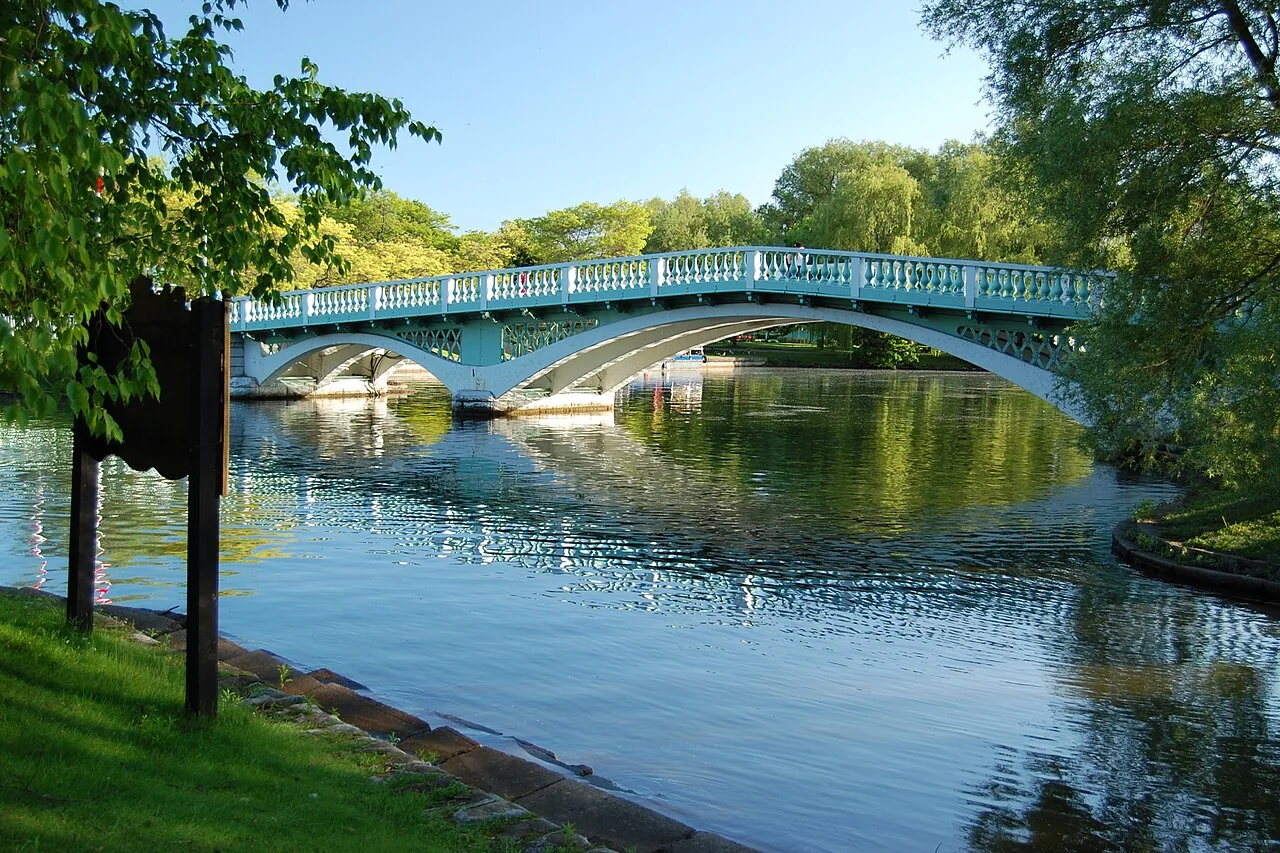
- July 9, 1988, on Algonquin Island.
- Their family
- Chow became stepmother to Layton’s children, Sarah and Mike.
- Years married
- 23 years, until Layton’s death in August 2011.
- Toronto landmark
- The tandem-bicycle memorial at Jack Layton Ferry Terminal.
Olivia Chow and Jack Layton met in Toronto in 1985 and married in 1988. For the next 23 years, their marriage overlapped with neighbourhood organizing, municipal debates and eventually life in Parliament. Layton’s death in August 2011 ended that partnership, but the story continued in Chow’s work and in the public places where Toronto remembers him. Layton Legacy’s biography; the City’s anniversary record.
Their relationship is often condensed into a familiar set of images: two politicians on bicycles, Chow beside Layton during his final illness, the chalk messages outside City Hall. Behind those images was an extended family and a marriage between people who brought different backgrounds to shared political commitments. Following both careers makes the history richer—and gives Chow’s life before and after Layton its proper place.
In this article
- Their relationship at a glance
- Two lives before the partnership
- A charity auction in 1985
- An Island wedding, and a city-sized celebration
- The family behind the public couple
- A marriage shaped by Toronto politics
- Ottawa brought two separate mandates
- The summer of 2011
- Chow’s part in the final letter
- Toronto’s public farewell
- Chow’s life and career after Layton
- The tandem bicycle on the waterfront
- What their story leaves to Toronto
- Frequently asked questions
Their relationship at a glance
| Year | What happened |
|---|---|
| 1985 | They meet at a charity auction; Chow also wins her first school-trustee election. |
| 1988 | They marry on July 9 on Algonquin Island. |
| 1991 | Chow is elected to Metropolitan Toronto Council. |
| 2003–2006 | Layton becomes NDP leader in 2003 and an MP in 2004; Chow becomes an MP in 2006. |
| 2011 | The NDP becomes Official Opposition in May. Layton dies on August 22; his state funeral follows on August 27. |
| 2013 | Toronto unveils the tandem-bicycle memorial and renames its Island ferry terminal for Layton. |
| 2023 | Chow takes office as Toronto’s mayor on July 12. |
The dates above follow the official Chow biography, parliamentary record, NDP leadership history, federal funeral record and City’s swearing-in announcement. Their marriage lasted 23 years; the roughly 26 years between meeting and Layton’s death is a different measure.
Two lives before the partnership
Chow was born in Hong Kong and arrived in Toronto at 13. She attended Jarvis Collegiate and worked in the arts, teaching and immigrant services before entering elected politics. Her official biography describes that range of work, including sculpture and counselling newcomers. Her experience of Toronto began in immigrant family life and community service well before she became part of a famous political couple. Chow’s biography.
Layton grew up in Hudson, Quebec, in a politically involved family. His father, Robert, became a Progressive Conservative MP. Layton’s own path led to the New Democratic Party and Toronto municipal politics: he was first elected to city council in 1982. He had previously been married to Sally Halford, with whom he had two children, Sarah and Mike. These details are recorded in the commemorative Layton Legacy biography.
Their backgrounds help explain the breadth of the partnership without making it seem inevitable. Each already had interests, relationships and a developing public life. Their later prominence can obscure how much of that groundwork preceded the marriage.
A charity auction in 1985
The usual starting point is a Toronto charity auction in 1985. That meeting appears in both Layton’s commemorative biography and CityNews’s profile of Chow. It was a fitting setting for two people whose social and working lives would be closely connected to community organizations. CityNews’s account of their meeting.
That same year, Chow was elected a school trustee. She served for six years before moving to Metropolitan Toronto Council in 1991. Layton was already a municipal politician when they met; they did not begin their elected careers together. Chow’s early elected roles.
The distinction matters because the relationship is sometimes retold as though Chow simply joined Layton’s political project. Her trustee work was an elected mandate of her own. Romance and political collaboration developed alongside two careers, rather than replacing one with the other.
An Island wedding, and a city-sized celebration
They married on July 9, 1988. A small but useful confirmation sits in an unlikely place: Toronto Council’s 1998 minutes record congratulations to Councillors Chow and Layton on their tenth wedding anniversary on July 9. Council’s anniversary entry.
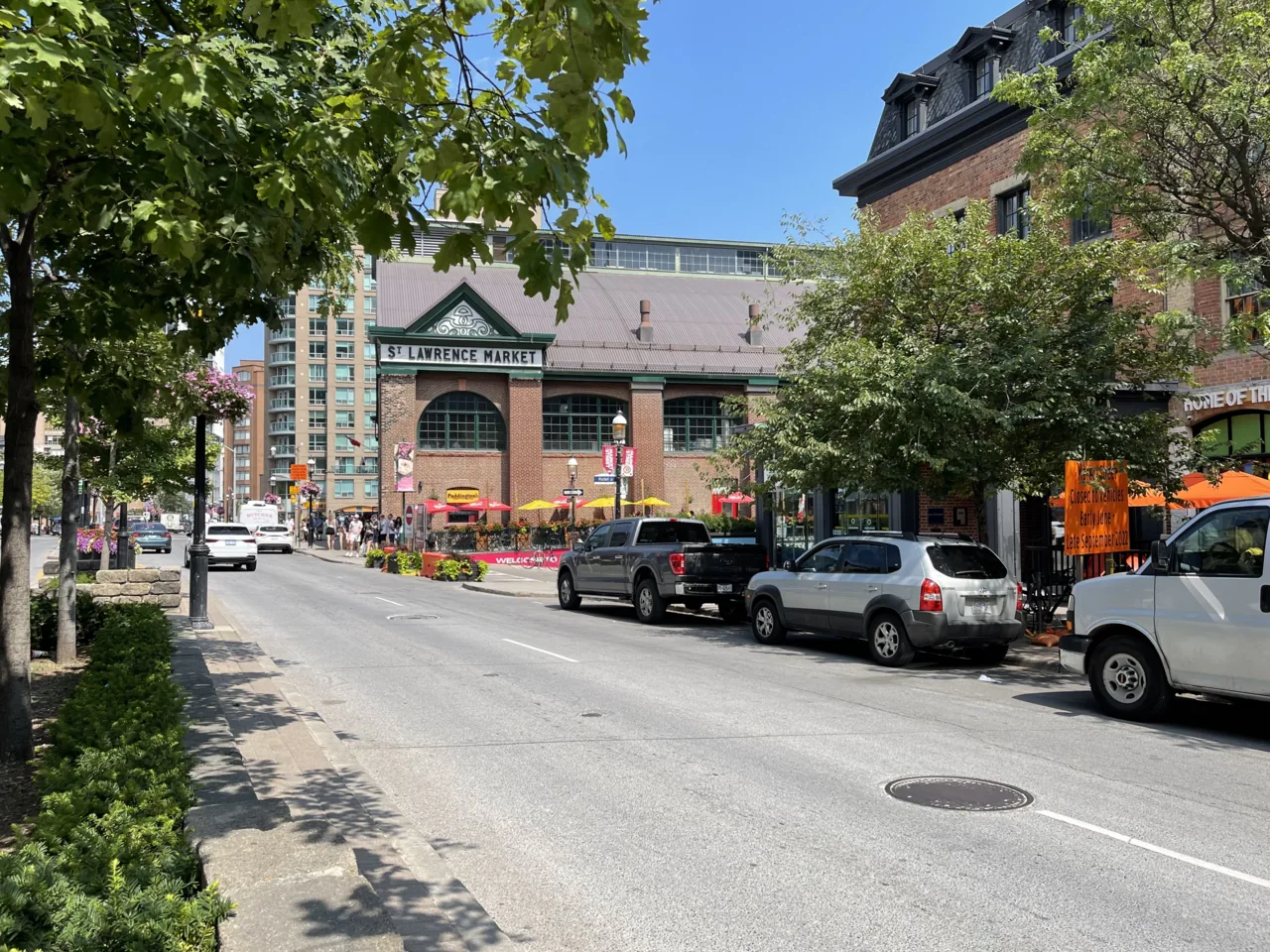
A contemporary Maclean’s portrait describes their ceremony on Algonquin Island and a reception at St. Lawrence Market. It recalls a gathering that brought together Chinese community members, artists and gay-rights activists, with Christian and Chinese ceremonial elements. The wedding reflected the overlapping communities around them, as well as their relationship. Maclean’s relationship portrait.
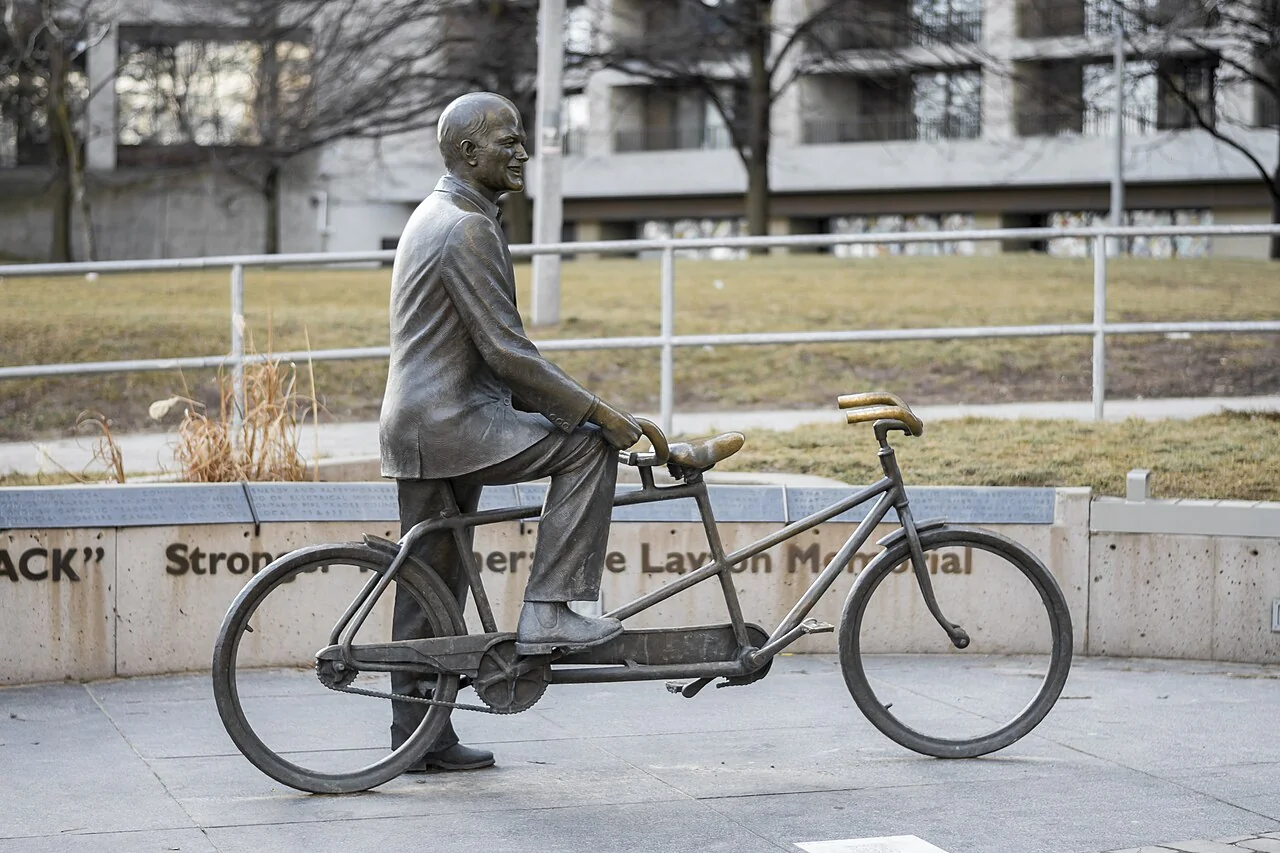
The tandem bicycle later associated with them was their wedding gift to each other, Chow said when the waterfront memorial was unveiled in 2013. She remembered riding together on the Islands, at Pride events and elsewhere in Canada. The bicycle was part of their actual shared life before it became a public symbol. Chow’s account of the wedding gift.
The family behind the public couple
Chow became stepmother to Sarah and Mike, Layton’s children from his first marriage. In its account of her memoir, CityNews reported that she described herself as their mother and did not regret not having biological children. That is her own account of family life, rather than an outsider’s explanation of their choices. Chow’s description of her family.
Her mother, Ho Sze Chow, was also central to the household. A 2020 Toronto Council condolence motion credits her with the shopping, cooking and cleaning that helped make the couple’s demanding public work possible. It also describes her interest in politics and the advice she offered after reading Chinese newspapers. The council tribute to Ho Sze Chow.
The motion is a tribute, but its attention to household labour adds something often missing from accounts of political partnerships. Two crowded public schedules were supported by other people’s time and care. The family story extends beyond the two names on election signs.
A marriage shaped by Toronto politics
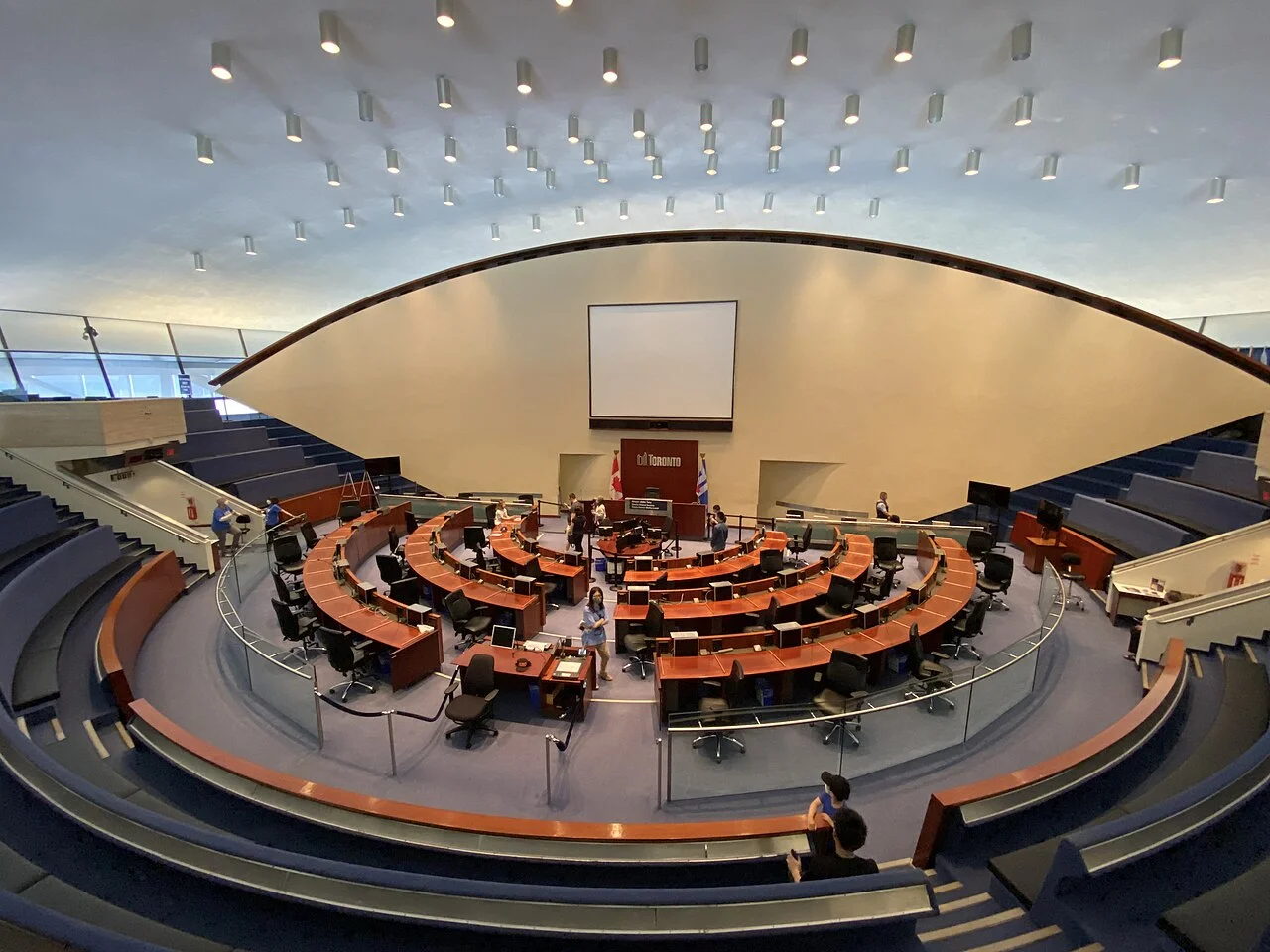
Chow and Layton both served on the amalgamated Toronto council, as the City’s historical membership lists show. They were spouses and colleagues, participating in the same institution while holding separate elected positions. Toronto’s historical council lists.
The Maclean’s portrait described differences in temperament: Layton as more socially exuberant, Chow as more deliberate. Friends recalled a partnership in which they influenced one another over time. The portrait presents their social life as another part of the partnership, with friends, community networks and political work frequently meeting in the same room. The contemporary portrait.
The council record offers a glimpse of that overlap. The 1998 anniversary greeting came amid debate about Toronto’s bid for the 2008 Olympics: Mayor Mel Lastman paused proceedings to congratulate the couple before the meeting recessed. Their tenth anniversary briefly became part of the working day at City Hall. The July 9 council minutes.
Ottawa brought two separate mandates
Layton became federal NDP leader in 2003 and won Toronto–Danforth in 2004. Chow won Trinity–Spadina in 2006, after unsuccessful federal runs in 1997 and 2004. They therefore arrived in the House of Commons at different times and represented different constituencies. NDP leadership dates; Layton’s election history; Chow’s election history.
Chow’s parliamentary record includes work on citizenship and immigration and, later, transport, infrastructure and communities. Those responsibilities provide a concrete counterweight to coverage that identifies her mainly as the leader’s wife. She was accountable to her own constituents and held her own committee roles. Chow’s House of Commons roles.
The 2011 election changed the scale of Layton’s job. The NDP won 103 seats and became Official Opposition for the first time. He became Leader of the Opposition in May; Chow was also re-elected. Their years of political work had brought them into a new parliamentary situation, one that lasted only a few months before his death. The party’s 2011 retrospective; Layton’s parliamentary offices.
The summer of 2011
On July 25, 2011, Layton publicly announced a temporary leave from the NDP leadership. He said doctors had identified a new cancer, separate from the prostate cancer he had previously disclosed, and that he would focus on treatment. His statement expressed an intention to return. It was an announcement of illness and leave, not a public farewell. Layton’s July 25 statement.
Less than a month later, on August 22, Chow, Sarah and Michael Layton announced that he had died at home with family and loved ones present. He was 61. The statement was issued in all three names: his wife and his children, speaking together for the family. The family statement; Canadian Heritage’s record.
For a reader looking back, the election, illness and death can seem to form one continuous story. For the people living through them, the July statement still held out the prospect of treatment and a return to work. Keeping those moments separate avoids reading certainty into a period that remained uncertain.
Chow’s part in the final letter
Layton’s letter to Canadians is dated August 20, 2011, two days before his death. Its opening entrusts the letter to Olivia to share. It addresses several audiences, including fellow cancer patients, party colleagues and young Canadians, before the closing passage remembered for the words “love is better than anger.” Read the original letter.
Chow’s involvement went beyond receiving it. In a published excerpt from his book, former campaign director and principal secretary Brad Lavigne recounts Layton, Chow, Anne McGrath and Brian Topp working through the text together on August 20. He describes revisions and discussion of the message Layton wanted to leave. His account places Chow inside the final piece of political work they shared, discussing language and helping revise the message. Lavigne’s account in Policy.
The letter belongs to their relationship history because it shows personal trust intersecting with political work at the end of Layton’s life. It was also deliberately a public document. Reading the complete text, rather than only its most repeated line, restores the political arguments and specific audiences around its message of hope.
Toronto’s public farewell
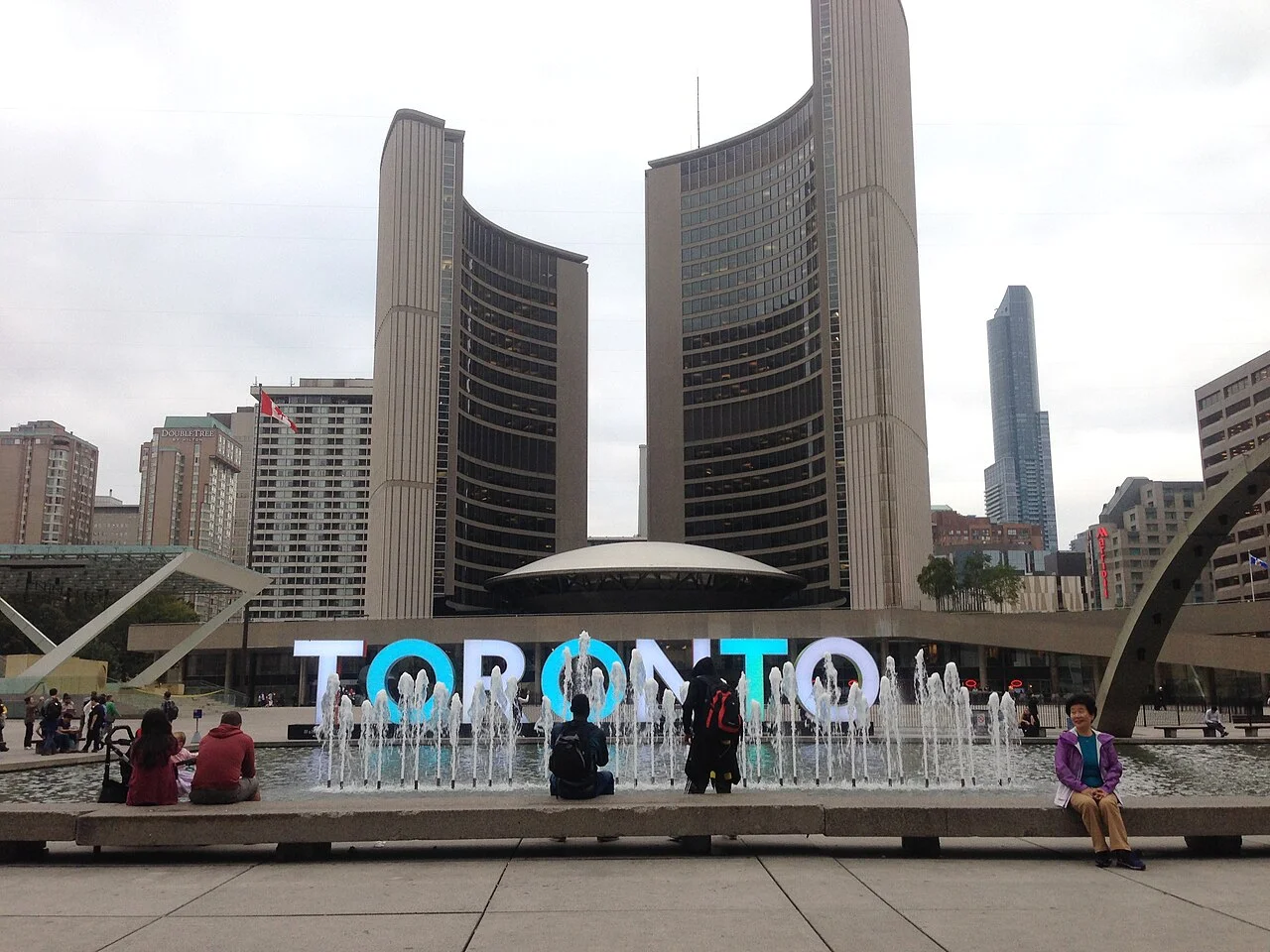
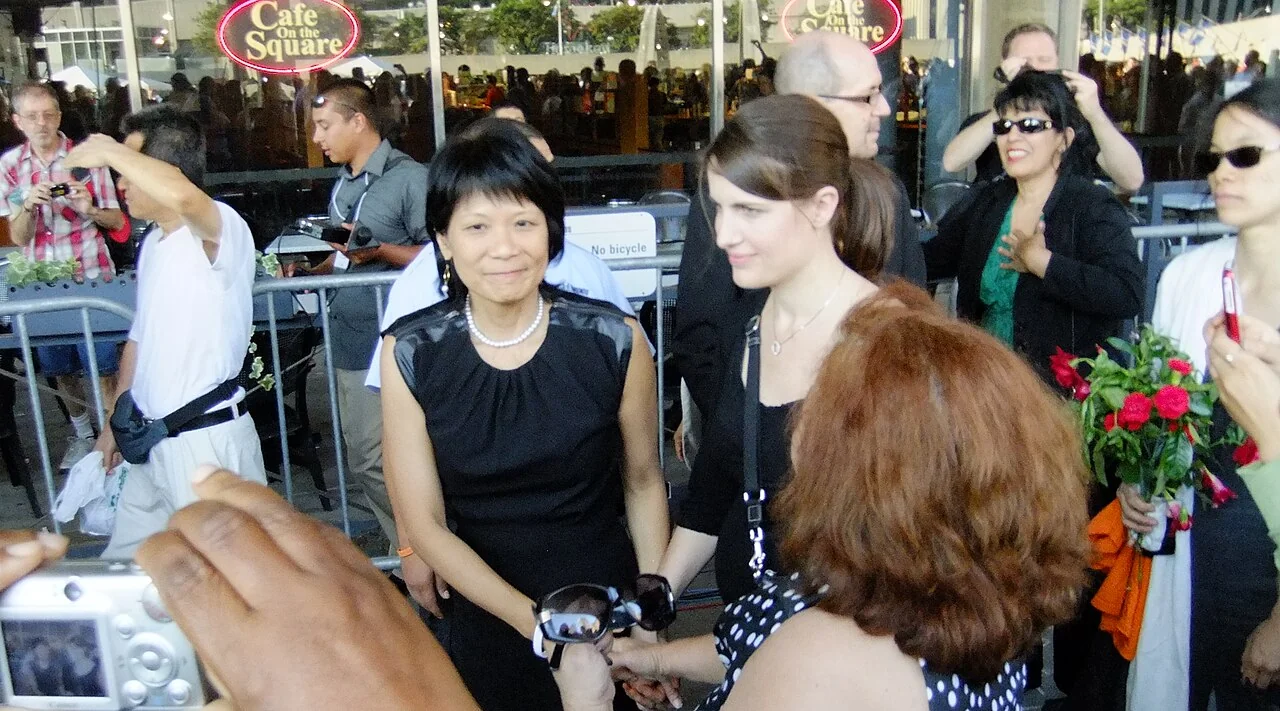
Nathan Phillips Square became a gathering place for grief after Layton’s death. Contemporary reporting described the chalk messages around City Hall and the people waiting to pay their respects. Chow and Layton’s family moved through a mourning process that was personal to them and intensely public to everyone watching. Contemporary reporting on Toronto’s farewell.
The official arrangements connected Ottawa and Toronto: Layton lay in state on Parliament Hill on August 24 and 25, then at Toronto City Hall on August 26 and 27. His state funeral took place at Roy Thomson Hall on August 27. The federal funeral record.
City Hall gave that national event a local setting. People could leave a message in a place associated with his earlier municipal life, not only watch a ceremony from a distance. The chalk tributes and official ceremony offered different ways to say goodbye: one spontaneous and written by individual visitors, the other a formal public farewell.
Chow’s life and career after Layton
Chow’s 2014 memoir, My Journey, brought her own account of immigration, work, family and loss into a longer narrative. Quill & Quire’s review discusses the book’s combination of personal experience and political life. The memoir let her tell the story in her own sequence, with her childhood and working life alongside the marriage and its loss. The review of My Journey.
Her later electoral path included setbacks. She finished third in Toronto’s 2014 mayoral election, behind John Tory and Doug Ford. In 2015 she ran unsuccessfully for Parliament in Spadina–Fort York. A return to elected office would take several more years. The certified 2014 results; Her federal election record.
In July 2023 she was sworn in as Toronto’s 66th mayor following the June by-election. That was nearly twelve years after Layton’s death. It belongs to Chow’s own continuing political history, as well as to the longer history of the city where they built their partnership. The City’s swearing-in announcement.
The tandem bicycle on the waterfront
At Jack Layton Ferry Terminal, the memorial places Layton on the rear seat of a tandem bicycle, leaving the front seat empty for someone else. Unveiled on August 22, 2013, it was created by David Pellettier and MST Bronze Ltd. The terminal was also renamed for Layton. The unveiling report.
The choice of a bicycle connects a public monument with an everyday object from the marriage. It also changes how a visitor encounters the memorial: the empty seat suggests participation rather than observation from below a pedestal. For people who know the wedding-gift story, the sculpture carries an additional, personal association.
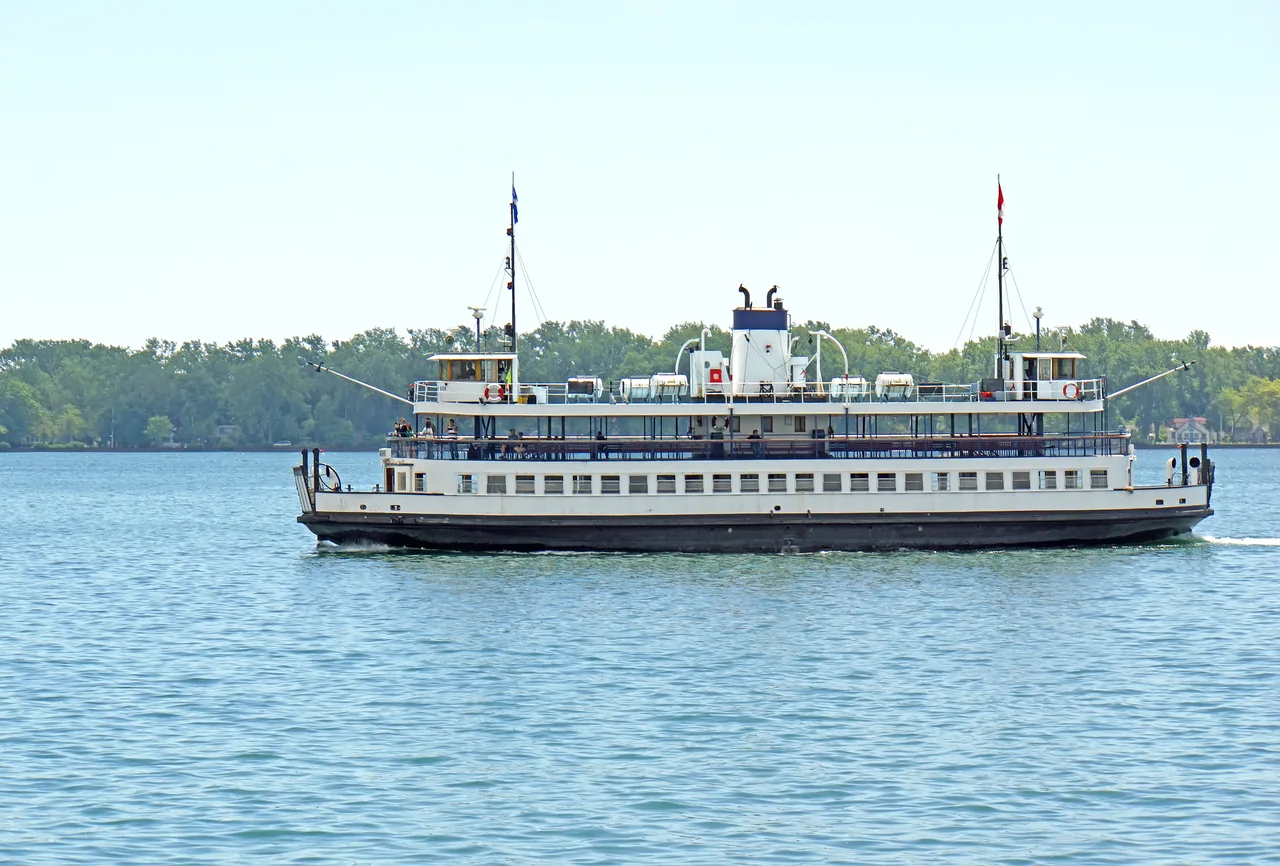
The location brings the history back toward the Islands, where the couple married. If you are planning a Toronto Islands visit, the terminal offers a point of connection between a familiar journey and a less familiar part of the city’s political past.
What their story leaves to Toronto
A charity fundraiser, an Island wedding, an extended household, council meetings, Parliament, a final letter: each setting reveals a different part of the partnership. Taken together, they show why its history cannot be contained in either a romance or an election biography alone.
The most useful way to remember Chow and Layton together is to keep both people visible. Their shared commitments and marriage mattered. So did the separate experiences, mandates and relationships that each brought to it. Remembering the help of family members also makes the account more complete.
The waterfront memorial brings those connections into an ordinary Toronto day. People approaching the ferries encounter a bicycle with a seat available, carrying a memory of a wedding gift, a marriage and years of shared work. It is a small, approachable way for a city to hold a complicated human story.
Frequently asked questions
How did Olivia Chow and Jack Layton meet?
They met at a Toronto charity auction in 1985. Their relationship developed while both were active in community and political work.
When and where did they get married?
They married on July 9, 1988, on Algonquin Island in Toronto. The City’s July 1998 council minutes record congratulations on their tenth wedding anniversary.
How long were Chow and Layton married?
They were married for 23 years, from July 1988 until Layton’s death on August 22, 2011. They had met about 26 years before his death.
Did Olivia Chow and Jack Layton have children together?
They did not have biological children together. Chow became stepmother to Layton’s children, Sarah and Mike, from his earlier marriage to Sally Halford.
Was Olivia Chow an MP while Jack Layton was NDP leader?
Yes. Chow represented Trinity–Spadina from 2006 to 2014. Layton led the NDP from 2003 until his death in 2011 and represented Toronto–Danforth from 2004.
Why is there a tandem bicycle at the ferry terminal?
The 2013 memorial depicts Layton on a tandem bicycle, with an empty front seat for visitors. Chow said the couple had given each other a tandem as their wedding present.
Sources & useful links
Details checked on September 13, 2026. This historical account draws on public records, contemporary reporting and attributed recollections. Memoirs and commemorative sources are identified in the text.
- Olivia Chow: official biography
- Layton Legacy: Jack’s biography
- CityNews: Olivia Chow profile, March 2014
- Toronto Council minutes: July 8–10, 1998
- Maclean’s: Jack Layton and Olivia Chow, a force field of two
- Toronto Council: condolence motion for Ho Sze Chow, February 2020
- City of Toronto: historical councillor lists
- House of Commons: Jack Layton’s roles and election history
- House of Commons: Olivia Chow’s roles and election history
- NDP: Jack Layton’s leadership, 2003–2011
- Jack Layton’s public statement, July 25, 2011
- Statement from Olivia Chow, Sarah and Michael Layton, August 22, 2011
- Jack Layton’s letter to Canadians, August 20, 2011
- Brad Lavigne: Jack Layton’s final days, Policy book excerpt
- Canadian Heritage: state funeral of Jack Layton
- CityNews and The Canadian Press: Canadians say final farewell, August 27, 2011
- Quill & Quire: review of My Journey
- Toronto Elections: 2014 official declaration of results
- City of Toronto: Olivia Chow takes office, July 12, 2023
- CityNews: Jack Layton statue unveiled, August 22, 2013