Toronto’s 2026 municipal election: the candidates, the stakes and how to vote
A crowded mayoral ballot, a consequential budget debate and a changed school-board map. Here is how to make sense of Toronto’s October 26 election.
At a glance
Key details
The details that matter most, in one place.
- Election day
- Monday, October 26, 2026 · 10 a.m.–8 p.m.
- Advance voting
- October 6–11 · 10 a.m.–7 p.m.
- Mail ballot request
- Apply by September 24 at 4:30 p.m.
- Mayoral field
- 53 certified candidates as checked September 13.
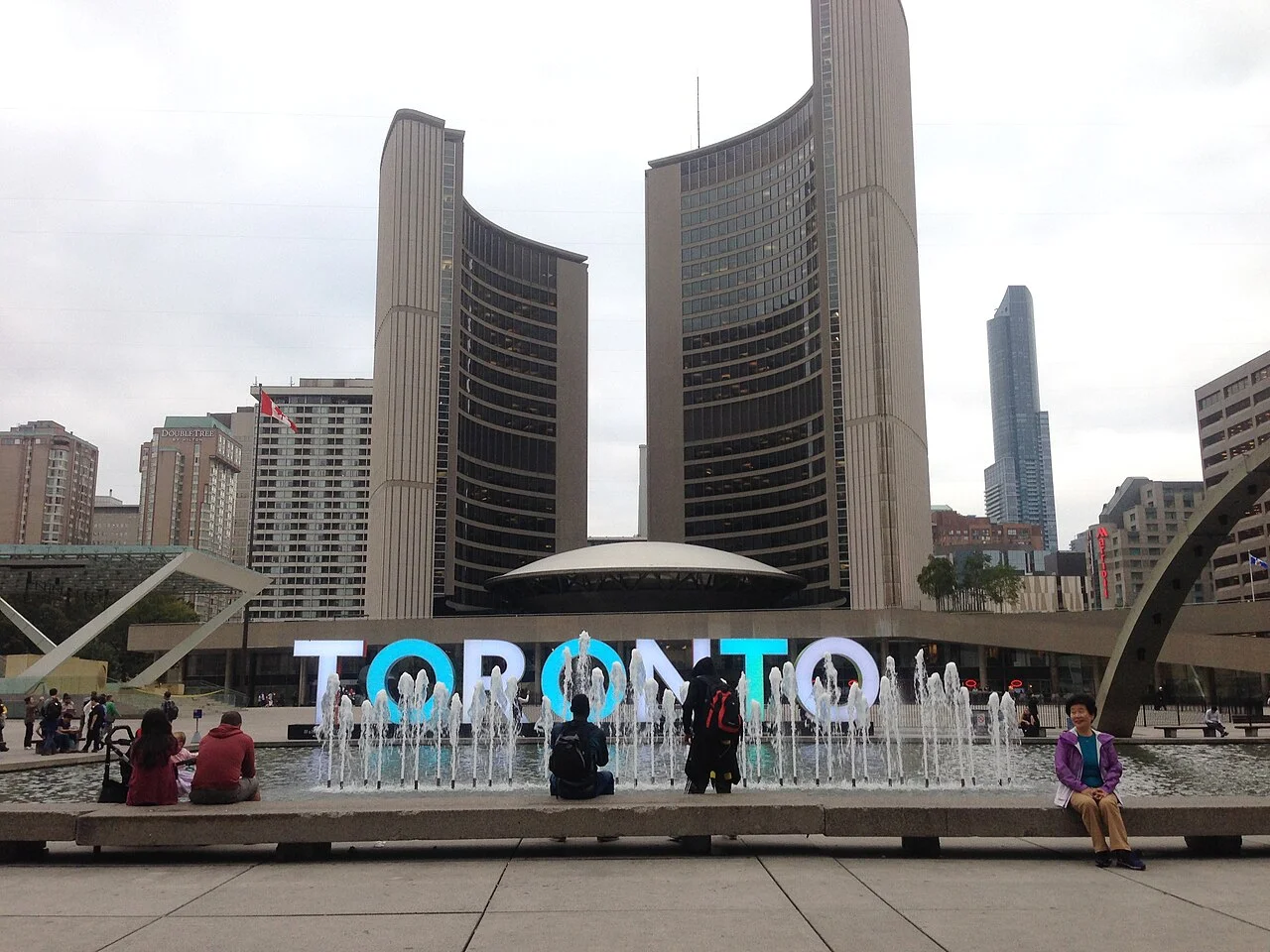
Toronto’s municipal campaign is underway, but election day is still ahead: Monday, October 26, 2026, from 10 a.m. to 8 p.m. Advance voting runs October 6–11. The City Clerk’s updated certification announcement records 361 candidates across the election’s offices; the mayoral directory lists 53 names. Those are different counts, covering different parts of the ballot. Toronto’s official election announcement; certified candidate directory.
The decision reaches well beyond the mayor’s office. It affects the people who scrutinize budgets, debate neighbourhood changes and make choices about the services Toronto pays for. The school-board election has an additional complication: the TDSB has a new ward map and remains under provincial supervision.
This explainer separates the ballot, the voting deadlines and the policy questions. Candidate lists and election information were checked on September 13, 2026. Campaign priorities are presented as the campaigns describe them, with no endorsement or prediction of the result.
In this article
- The dates to put in your calendar
- Who is running for mayor?
- What the mayor and council can actually change
- The tax debate needs a clear starting point
- Housing and infrastructure: count outcomes carefully
- The TDSB election comes with an important qualification
- Check eligibility and choose a workable way to vote
- A practical way to follow the remaining campaign
- Frequently asked questions
The dates to put in your calendar
Election day is only one way to participate. Toronto also offers six advance voting days and a mail-in option with an earlier application and return timetable. The following deadlines are Toronto-specific; do not apply them to a neighbouring municipality.
| Step | Date and time |
|---|---|
| Be on the list to receive a mailed voter information card | September 20, before 11:59 p.m. |
| Request a mail-in ballot | September 24, by 4:30 p.m. |
| Advance voting | October 6–11, 10 a.m.–7 p.m. |
| Completed mail ballot received by Toronto Elections | October 14, by noon |
| Election day | October 26, 10 a.m.–8 p.m. |
All times are Toronto local time. Official key dates and voting hours.
The September 20 date concerns receiving a voter information card in the mail. It is not a deadline after which otherwise eligible residents lose the right to vote. The City’s online list-update period continues until October 11 at 7 p.m.; after that, changes can be made at the voting place on election day. Use the City’s MyVote tool to confirm the address, ward and location that apply to you.
For a mail ballot, the critical distinction is received, rather than postmarked. Toronto Elections must have the completed package by noon on October 14. Secure yellow drop boxes are available from October 1 until that deadline. Requesting a package early gives you more time to follow its instructions and return the signed declaration. Mail-in voting instructions.
Who is running for mayor?
The certified field has 53 candidates. Olivia Chow and Brad Bradford are both on it, alongside many candidates whose campaigns receive less attention. The list below follows the City’s surname order. The official directory also provides the campaign websites and social accounts candidates submitted, plus separate councillor and trustee tabs.
See all 53 certified mayoral candidates
- Imad Abdulkadir
- Bahira Abdulsalam
- Chris Alexander
- Jamie Atkinson
- Brad Bradford
- Darrell Brown
- Brian Buffey
- Braeden Chow
- Olivia Chow
- Logan Choy
- Kevin Clarke
- Paul Collins
- Alex Cruze
- Roberto Curto
- Laura Dean
- Habiba Desai
- Cory Deville
- Wincess Dorville
- Laura Ellis
- Martin Fraser
- Alton Frederick
- Edward Gong
- Faizan Haider
- Thomas Hall
- Peter Handjis
- Jack Hartley
- Heather He
- Mohamad Kaaki
- Georgios Kalkounis
- Isidoros Kyrlangitses
- Michael Lamoureux
- Rick Lee
- Reagan Levermany
- Eddie Mayanja
- Sarah McVie
- Francis Mercieca
- Joseph Osuji
- Odessa Paloma Parker
- Gus Prokos
- Faisal Razi
- Amy Rosen
- Lyall Sanders
- Naomi Sayers
- Robert Shusterman
- Sandeep Srivastava
- Weizhen Tang
- Joshua Thompson
- Kuo Yu Tong
- Jeffery Tunney
- Jack Weenen
- Henoke Yohannes
- Leila Yohannes
- Mostafa Zandkarimi
Registration, a campaign announcement and certification are different stages. For the names actually in contention, use the certified list rather than an old article about someone considering a run. This is a dated snapshot; the linked directory is the place to check subsequent official changes.
Chow and Bradford offer a useful example of how to read campaign framing without mistaking it for a complete policy comparison. They are discussed here because their published pitches directly concern the record and direction of the current City government; the full field remains above.
Olivia Chow’s published pitch
Chow’s re-election homepage emphasizes continuity: school meals, frozen transit fares, seven-day library service, more emergency and crisis workers, and funding secured from other governments. These are the campaign’s descriptions of its record and priorities. The next question for a voter is what would be maintained, expanded or changed in the next term, and at what recurring cost. Chow’s campaign homepage.
Brad Bradford’s published pitch
Bradford’s homepage emphasizes crime, congestion and cost of living, with additional sections on cleanliness and economic competition. It argues that residents are paying more without receiving adequate services. Those are campaign arguments, rather than independent measures of service performance. The equivalent follow-up is which concrete interventions, budgets and timelines would deliver the proposed improvement. Bradford’s campaign homepage.
Neither a homepage slogan nor a candidate’s own account of their record is a substitute for examining a detailed commitment. Apply the same questions to every campaign: what changes, who can authorize it, how much it costs, and what evidence would establish success?
What the mayor and council can actually change
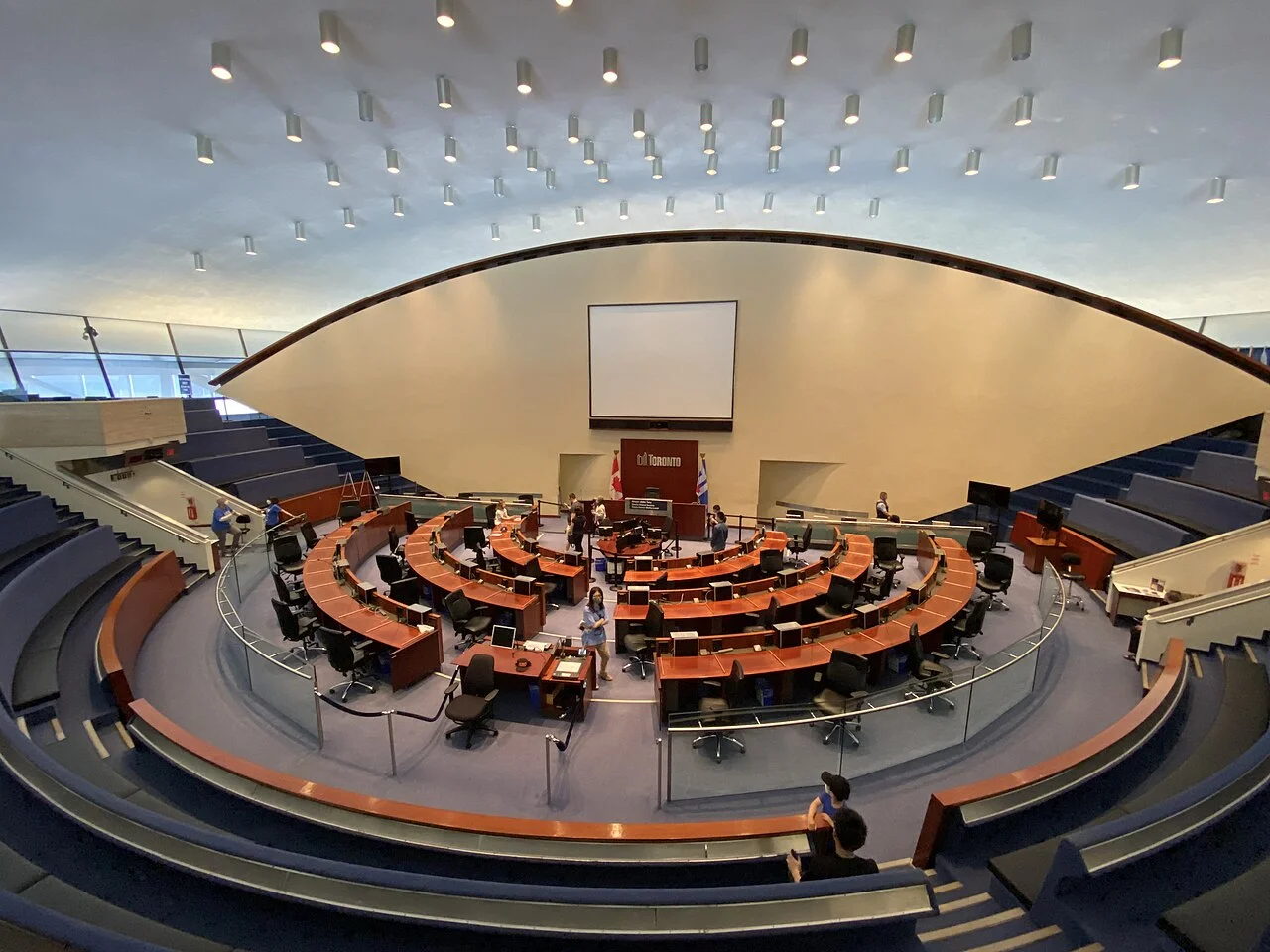
The mayoral contest sits alongside the election of councillors for Toronto’s 25 City wards. At Toronto City Hall, individual representatives work within a larger decision-making system: council, committees, staff reports, agencies and provincial legislation. The City’s council portal links to members, agendas and decisions; its 2026 ward reference chart also shows the City ward numbers.
Ontario’s strong-mayor rules give Toronto’s mayor specific additional powers, including proposing the municipal budget. Councillors can amend it; mayoral vetoes and council overrides follow defined procedures. Certain other powers are tied to prescribed provincial priorities. This is a framework with legal conditions, not unlimited authority to deliver any campaign promise. Ontario’s explanation of the powers.
For a promise about better bus service, ask whether it concerns operating money, vehicles, staffing, road priority or a capital project delivered with another government. For a promise about housing, distinguish planning permission from construction financing and occupancy. The office a candidate seeks should match the action they say they will take.
This makes councillor races consequential even when the mayoral campaign dominates conversation. A useful local questionnaire asks each ward candidate for two specific budget priorities, one difficult trade-off, and a commitment to explain their votes. It also asks how residents will be able to follow a problem from a constituency-office response to an actual council decision.
The tax debate needs a clear starting point
Toronto’s adopted 2026 budget provides a concrete baseline. The combined residential increase is 2.2 per cent: a 0.7 per cent operating levy increase plus a 1.5 per cent City Building Fund levy increase. The City’s example translates that to $91.53 a year on a home assessed at $692,140. That is an assessment-based example, not a forecast for every household. Adopted 2026 budget announcement.
A campaign citing only the operating increase leaves out the dedicated levy. A campaign citing an average dollar amount without identifying the assessment leaves out another essential part of the calculation. Ask for the proposed change to the full applicable bill, the property class being discussed and whether separate utility charges would move as well.
Then look beyond the first year. A recurring service needs recurring funding. A reserve draw can cover a temporary gap, but it does not by itself establish how the same service will be paid for later. A delayed purchase can reduce this year’s spending while leaving a future replacement cost. These are questions to put to any low-tax or expanded-service platform, regardless of the candidate.
The service-area budget notes are more useful for this work than a headline total. Pick a service you use, identify its adopted spending and stated service level, then compare the proposed change against that baseline. A promise is easier to judge when both its cost and its effect on service are visible.
Housing and infrastructure: count outcomes carefully
The 2026 budget announcement says it supports 27,000 new rental homes, including 9,700 rent-controlled and affordable units. It also sets out a $63.1-billion, ten-year capital budget and plan, with 53 per cent devoted to keeping existing infrastructure in good repair. These are descriptions of budget support and a multi-year plan; they do not mean those homes are already occupied or that all that spending occurs in 2026. City budget figures.
That distinction matters during an election. Housing announcements can count land released, applications approved, financing committed, construction starts or completed homes. Each is meaningful, but they measure different stages. Before comparing two candidates’ numbers, establish what is being counted and over which years. Otherwise a completed building and a pipeline of potential projects can appear in the same league table.
For affordability, ask who the homes are intended to serve, the definition used to set rent, how long the affordability condition lasts, and what happens when it expires. For delivery, ask which partners have committed money and which approvals remain. A large target becomes more informative when it is accompanied by a credible sequence of funded steps.
Infrastructure deserves the same attention. A new facility brings construction costs and ongoing maintenance. Repairs to a bridge, stormwater system or transit asset may attract less campaign attention but still determine whether daily services work. Ask candidates which existing projects they would protect, accelerate, redesign or stop—and what each choice would do to the rest of the plan.
The TDSB election comes with an important qualification
The TDSB now publishes a 12-ward trustee structure. It also states that, during provincial supervision, trustee powers rest with the provincially appointed supervisor and trustees have no official duties. The board explicitly says this applies to trustees elected in October 2026 while supervision continues. An election therefore does not, by itself, establish that the new trustees will immediately exercise the usual board powers. TDSB ward and supervision information.
Trustee boundaries also differ from City council wards. The City’s 2026 school-board reference chart maps the four boards’ trustee areas to City wards. Do not assume your councillor ward number identifies your trustee contest, or that an old trustee map still applies.
The practical sequence is to confirm your school support and eligibility, find the relevant trustee area, and then read that contest’s candidate list. Ask candidates to distinguish the representative role they hope to perform from the powers currently available under supervision. That produces a more useful discussion than a promise to immediately reverse a decision they may not have authority to change.
Some trustee contests are already resolved by acclamation. Toronto’s certification release lists four acclaimed candidates across the Catholic and French public boards. An acclamation means no competing candidate for that office; it does not cancel the separate mayoral or councillor election. Official certification and acclamation notice.
Check eligibility and choose a workable way to vote
Toronto’s core qualifications are Canadian citizenship, being at least 18 on voting day, a qualifying connection to Toronto through residence or personally owned or rented property, and not being legally prohibited from voting. The City also explains qualifying spouses and special circumstances. A person can vote only once in Toronto regardless of how many properties they own or rent; residents vote in their home ward. Full voter qualifications.
Renting is not a barrier to eligibility. Nor should you assume a missing voter card settles the question. Check your record through Toronto Elections and follow its instructions to add or correct the information. A person’s municipality, qualifying address and school support determine different parts of the ballot, so resolve a mismatch before choosing candidates from a ward list.
If attending a voting place is difficult, compare the mail-in option with the City’s proxy process and accessibility services. A proxy is another eligible voter formally appointed to cast a ballot on your behalf; it is not simply giving someone your voter card. Toronto also provides guidance for eligible voters without a permanent address. Voting options and accessibility contacts.
Use official election staff for an unusual eligibility or access question. Keep your own plan simple: the voting method, the applicable deadline, the required identification and a confirmed location. Check the official information again before travelling, particularly if you last voted in a different election or have moved.
A practical way to follow the remaining campaign
Start with the certified names for your own ballot. For each office, choose a small set of questions and ask them consistently. A useful comparison sheet has columns for the proposed action, its cost, its funding source, the body with authority to approve it, its delivery date and the evidence offered. Leave an unanswered field blank rather than filling it with a favourable or unfavourable assumption.
For a candidate with a council record, follow the underlying motion through the public meeting records. Check what was actually voted on, any amendments, and the final outcome. A campaign graphic can accurately name a vote while omitting the wording that explains it. For a new candidate, apply the same scrutiny to the feasibility and detail of their proposal.
Distinguish campaign material, independent reporting and official election administration. A campaign website tells you what the candidate wants to emphasize. An election office establishes ballot and voting information. A poll measures a particular sample at a particular time; it does not certify a candidate or establish a result. This guide makes no claim about who is ahead.
If your household also follows a neighbouring city, use our Mississauga, Brampton and Markham election comparison. The common election date can hide different advance-voting calendars, regional seats and voting methods. Toronto’s instructions should stay attached to Toronto’s election.
Frequently asked questions
When is the Toronto municipal election in 2026?
Election day is Monday, October 26, 2026, from 10 a.m. to 8 p.m. Toronto advance voting runs October 6–11 from 10 a.m. to 7 p.m. All times are local.
Can I vote by mail in Toronto?
Eligible voters can request a package by September 24 at 4:30 p.m. Toronto Elections must receive the completed package by October 14 at noon. Follow the official package instructions; mailing it on the deadline is not enough.
How many people are running for Toronto mayor?
The City’s certified mayoral directory listed 53 candidates when checked on September 13, 2026. The 361-candidate figure in its certification announcement covers multiple offices, not just mayor.
Does being elected restore TDSB trustees’ powers?
Not automatically. The TDSB says trustee powers rest with the provincial supervisor during supervision, including for trustees elected in October 2026 while that supervision continues.
Sources & useful links
Details checked on September 13, 2026. Candidate information and voting arrangements can change. Use the official links below to confirm the details that apply to you.
- Toronto Elections — key election dates
- City of Toronto — candidate certification, updated August 26, 2026
- Toronto Elections — certified candidates and campaign links
- Toronto Elections — who can vote
- Toronto Elections — mail-in voting
- Toronto Elections — voting options and other services
- Olivia Chow campaign — published re-election priorities
- Brad Bradford campaign — published priorities
- City of Toronto — 2026 budget adopted, February 10, 2026
- City of Toronto — 2026 city budget documents
- Ontario — strong mayor powers and duties
- City of Toronto — council, meetings and records
- TDSB — trustee wards and provincial supervision
- Toronto Elections — 2026 school board ward reference chart